Prepare a Clean Product Background
Explore a background-removal workflow when you need to simplify a product image before using it in another visual project.


Loading history…
The Outstanding Tiny Desk AI Video Generator guide helps you shape a readable, uncluttered band scene and a simple ending. Build the idea around a light wood desk, linen backdrop, and gentle daylight, with performers kept clearly visible from start to finish. This is an independent original desk-band concept, not a supplied concert template or recording. Choose Text to Video for fictional performers described in your prompt, or Image to Video to animate one prepared group photograph.
Use Text to Video to describe fictional performers and a room without uploading a photo. Use Image to Video when you have one prepared ensemble photograph to animate. It preserves the people and composition shown in that image; it does not provide separate portrait slots or automatically assign band roles. Prepare a group photo that already includes the intended performers and instruments.
Describe a light wood desk, linen backdrop, gentle daylight, and clear space around the band. Keep movement restrained: a small shoulder sway followed by a friendly closing wave, all within one steady continuous ensemble shot. Ask performers to remain in place with plausible hands. Avoid relying on intricate instrument action or a changing camera setup.
In Seedance 2.5, check the live duration, aspect, resolution, and audio panel before generating; the available settings are shown there. Audio follows the options currently presented, and no original recording is bundled. Check the current credit information beside Generate, then follow the job status in History. There is no guaranteed free allowance or guaranteed result.
Review whether the group remains readable, the background stays uncluttered, and the ending pose is clear. Treat any preview frames as planning references, not proof of a finished performance. If the output misses the intended composition, revise the prompt or prepare a clearer single group photograph before trying again, while checking the current credit display.
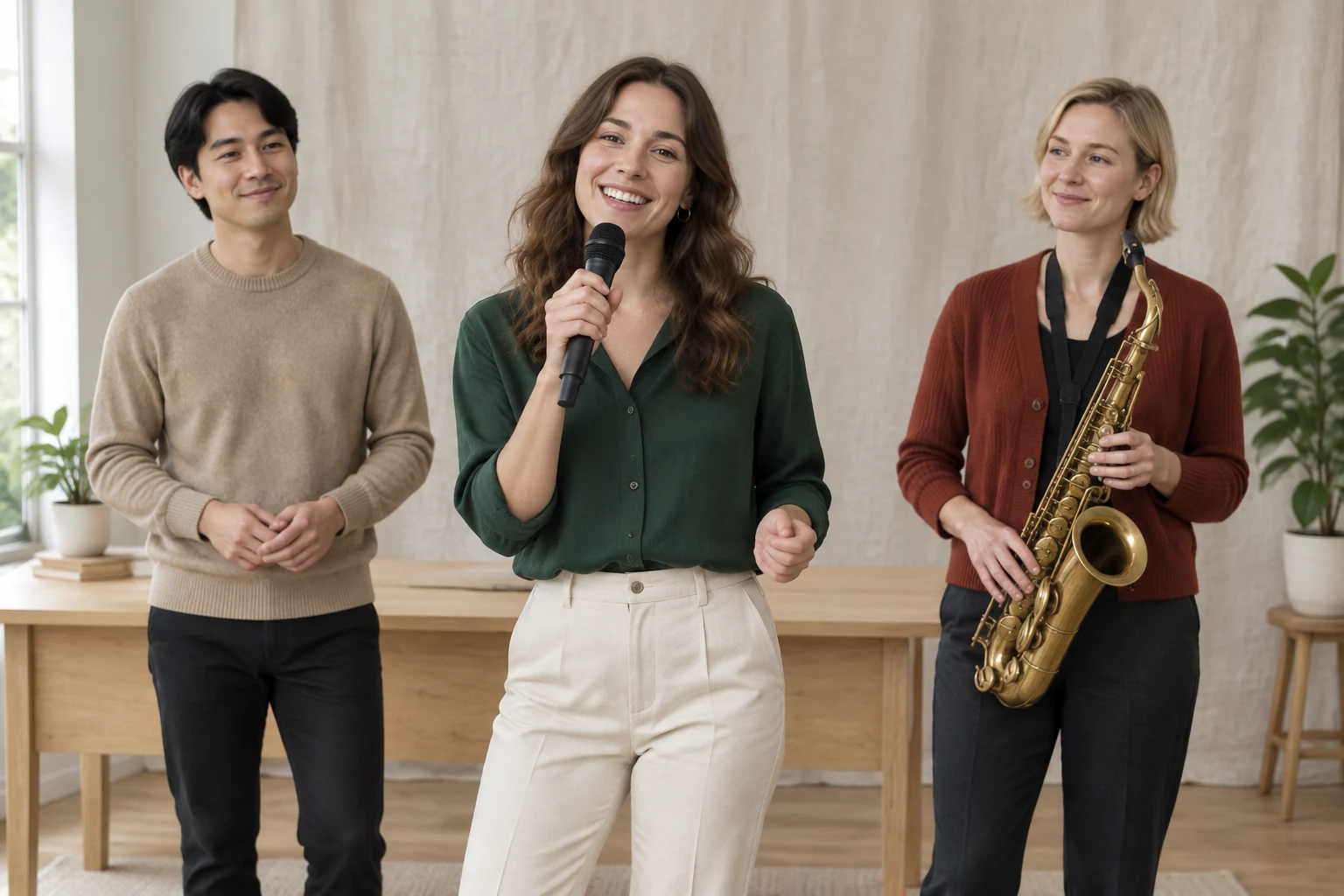
A strong small-room scene gives each performer visual breathing room. Keep the desk, backdrop, and daylight simple so they support the ensemble rather than compete with it. In the fictional example, an adult woman with wavy brown hair wears a forest-green shirt, an adult man with straight black hair wears a sand-colored sweater, and an adult woman with short blonde hair wears a brick-red cardigan. These details help establish one original scene; they are not required when animating a different group photograph. For Image to Video, the uploaded image should already contain the actual ensemble, instruments, and arrangement you want to keep.
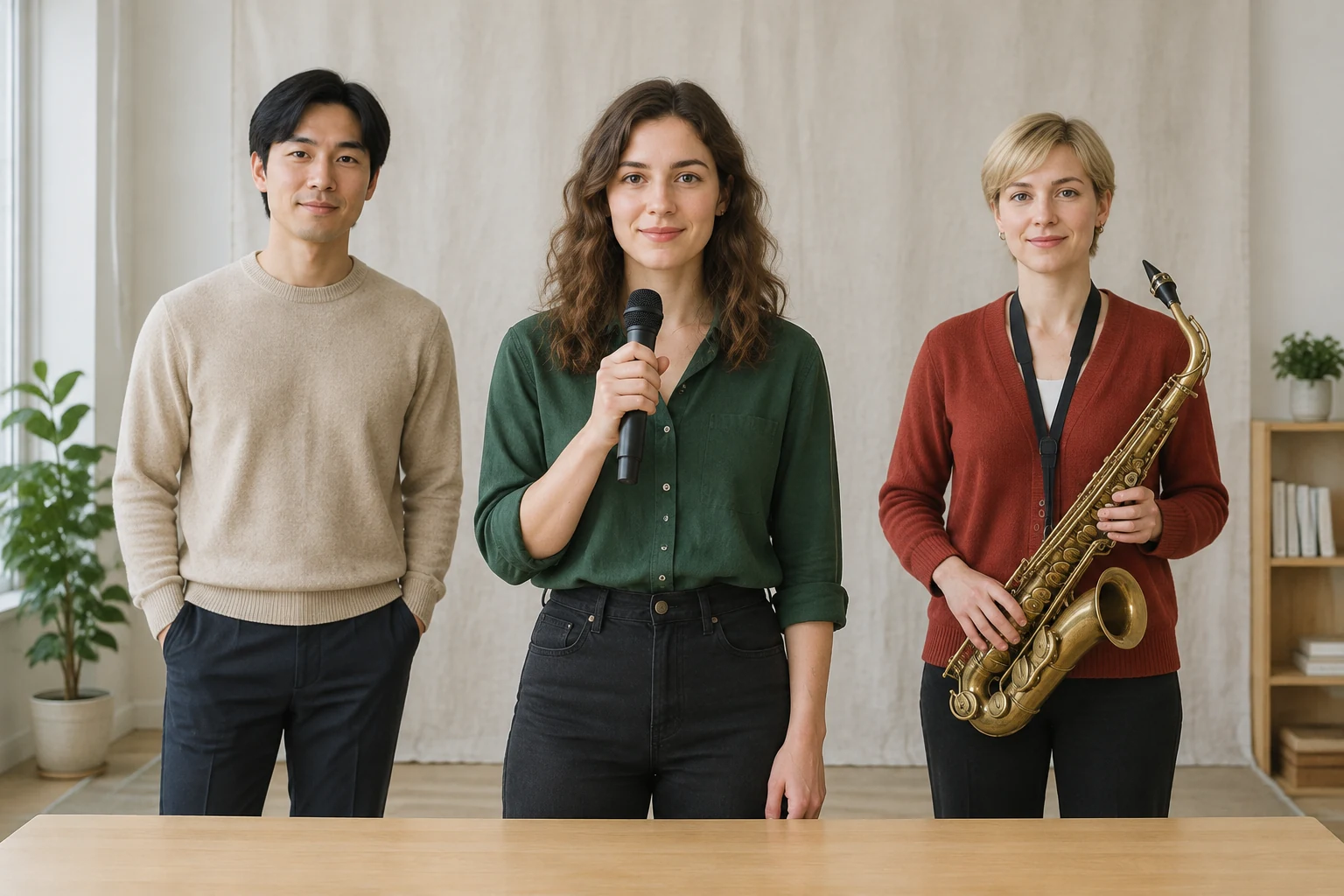
Text to Video creates a fictional scene from written direction and does not need an image upload. Give it a cast, room, composition, and restrained movement rather than asking for a complicated performance. Image to Video animates one prepared group photograph and should preserve its actual people, faces, hairstyles, clothes, room, positions, and instrument arrangement. It does not accept separate portrait slots or automatically decide who plays which role. Use the edit prompt as a starting point, then keep instructions consistent with what is actually visible in your photo.
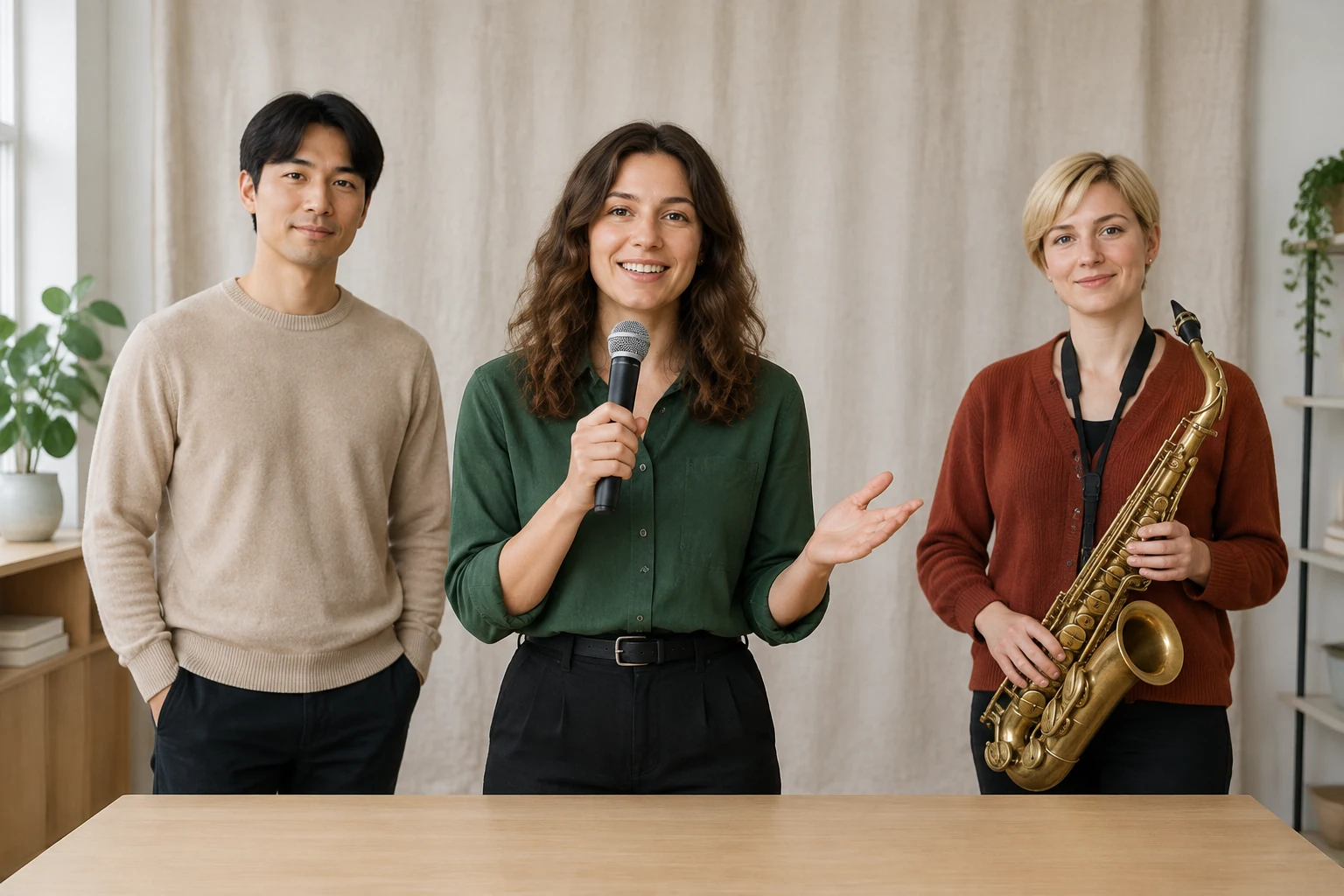
A small shoulder sway and friendly closing wave can communicate a relaxed ensemble moment without requiring complex movement. Keep everyone in place, maintain one continuous group shot, and ask for plausible hands. Do not count on guaranteed lip sync, a saxophone solo, detailed hand playing, cuts, or synchronization to music. The final pose should be easy to read against the calm background. A nine-second silent three-frame slideshow can help plan the ensemble, greeting, and ending, but it is only a planning preview—not a finished generated performance.

Seedance 2.5 presents live controls for duration, aspect, resolution, and audio in its options panel, so review the settings shown for your session rather than assuming a fixed runtime or format. Audio availability follows those live options; no original recording comes with the guide. Before choosing Generate, check the current credits displayed beside it. Then use History to follow the generation status. Outcomes and free allowances are not guaranteed, so make decisions using the information visible in the interface.
Yes. Choose Text to Video to describe fictional performers and their room without an upload. Image to Video instead animates one prepared ensemble photograph.
No. It animates one group image and does not offer separate portrait slots or automatic band-role assignment. Prepare a photo that already shows the intended people, instruments, and arrangement.
No. The edit prompt is designed to preserve the uploaded photo’s actual cast, clothing, room, and instrument arrangement. It should not force the example people or add or replace people or instruments.
Check the live duration, aspect, and resolution options in the Seedance 2.5 panel. The available controls may vary, so the guide does not promise a fixed runtime or format.
Audio follows the options currently shown in the panel, and no original recording is bundled. Lip sync, musical synchronization, solos, and complex instrument playing are not guaranteed.
Check the current credit information beside Generate before submitting, then follow the status in History. Neither a free allowance nor a particular generation outcome is guaranteed.
Explore a background-removal workflow when you need to simplify a product image before using it in another visual project.
Find a bulk workflow for creating consistent white backgrounds across a set of images.
See how to resize multiple images when preparing a consistent set of visual assets.
Browse another video concept guide for a different kind of short-form scene.
bulkbgremover.com · Updated